Training

Training

Overview

Getting started on the University supercomputers can be intimidating. Just to start with, everyone refers to HPC. What does that even mean?  Well High Performance Computing, but really these are computers and storage managed by us to help your research. They can be considered as extensions of your laptop with a similar appearance, or something much more complex for magnetohydrodynamics on galactic formation. This training material is designed to help with getting started and with complext concepts.

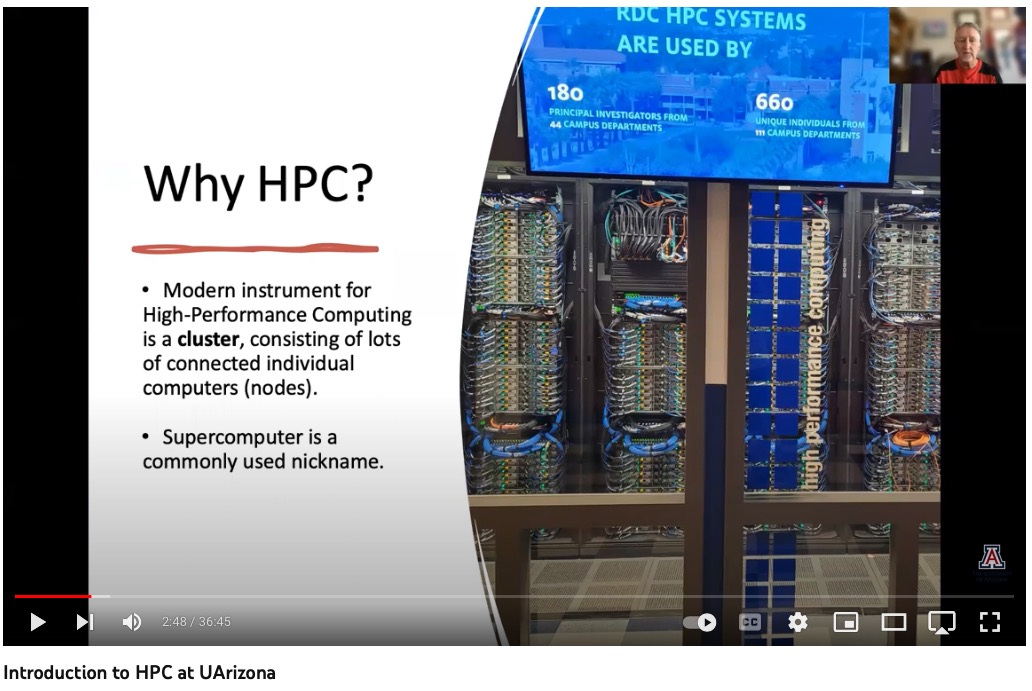
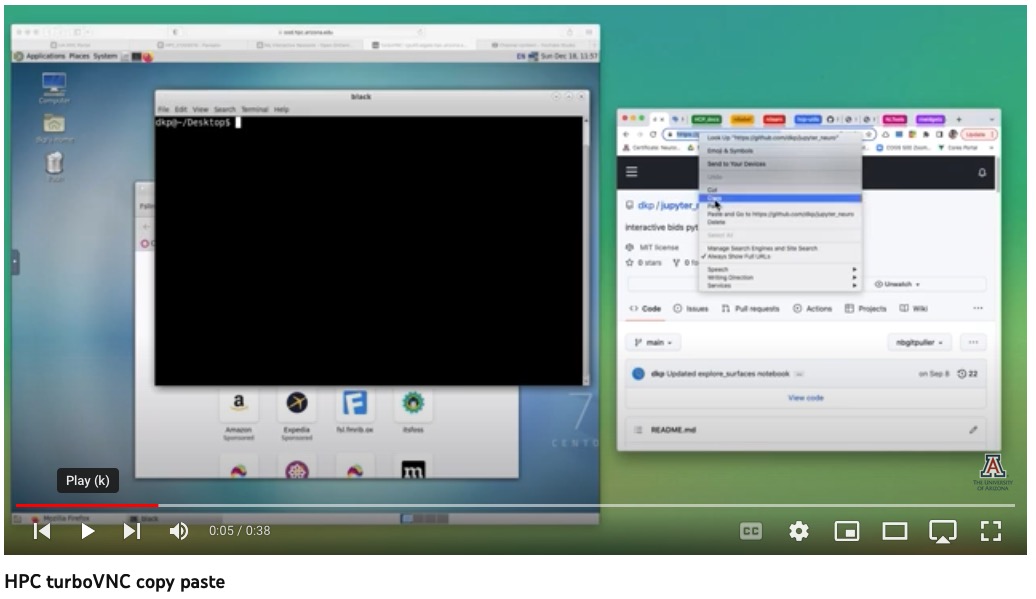
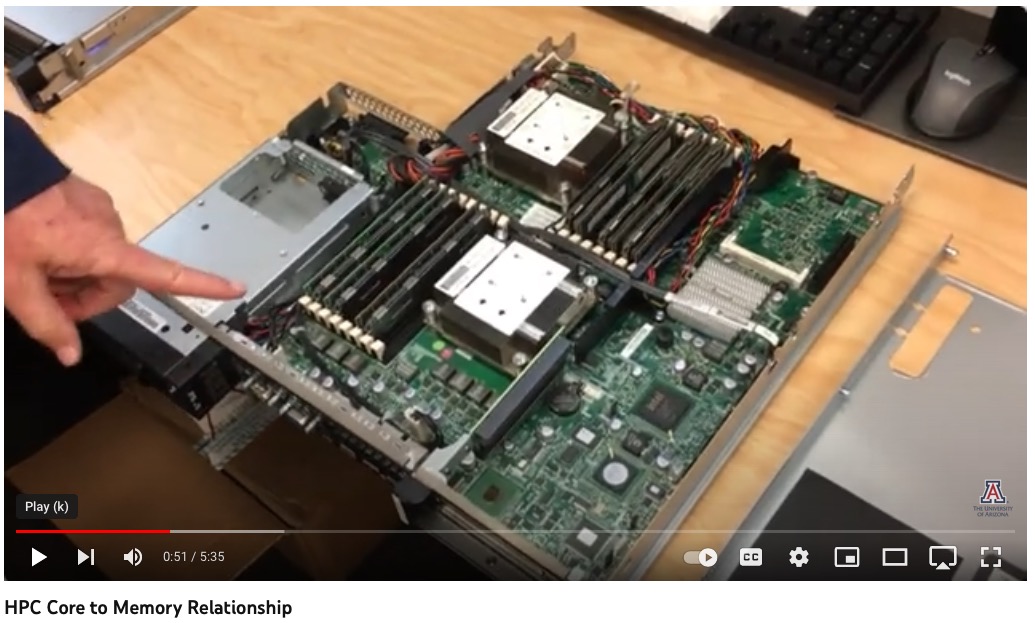
To start, you should review Intro to HPC, where you can attend the workshop conducted each semester, watch the YouTube video, or review the PDF. The rest of the series of workshops are in the theme of Intro to something on HPC. We also have a selection of short videos that cover a specific topic that are often best demonstrated visually. From time to time we conduct specific workshops led by one of vendors like Nvidia or Matlab and those are announced a couple of weeks in advance.

HPC Workshops

Every semester, we offer a variety of workshops including, but not limited to, Intro to HPC, Intro to Machine Learning, Intro to Parallel Computing, Intro to Containers, and Data Management Workshops. Check the Workshops and Schedule section below to see the dates of our upcoming sessions or check out the links on the right-hand side for detailed information. We announce upcoming workshops through the hpc-announce listserv so if you do not see any workshops scheduled, keep your eye on your inbox. You may also want to look through our detailed pages for course slides, video presentations, and interactive guides.

Self Guided Training

Need some help getting started with Linux, GPU programming, Singularity, OpenMP, or Matlab? Check out the Self Guided Training section below for resources to get you up and running. 

External Training

Our workshops place an emphasis on introductory material in the context of HPC. We are often asked about more intermediate level workshops. These are typically conducted by other groups on campus. So check these out:

the Data Science Institute or

the University Libraries Data Cooperative or

the UArizona DataLab


As a new researcher, you should view the Research Support from RII, Research, Innovation and Impact

Detailed Information on our Workshops

Page Contents

HPC Workshops Schedule

These workshops are all introductory by nature. If you want more advanced workshops, the Data Science Institute conducts a broad range that can be found on their calendar.

Workshops Taught by HPC

WorkshopDateTimeLocationRegistrationDetails
Nvidia GPU's with PythonOctober 27, 202310-12 NoonVirtualQualtrics
Matlab: Parallel ComputingFebruary 15, 202410-12 NoonIn personRegistrationDetails
Matlab: Deep LearningFebruary 16, 202410-12 NoonIn personRegistrationDetails
Intro to HPCMarch 1, 202410-1130 AMMain Library
CATalyst B201
RegistrationDetails
Data Management on HPCMarch 6, 202410-1130 AMVirtualRegistration Details
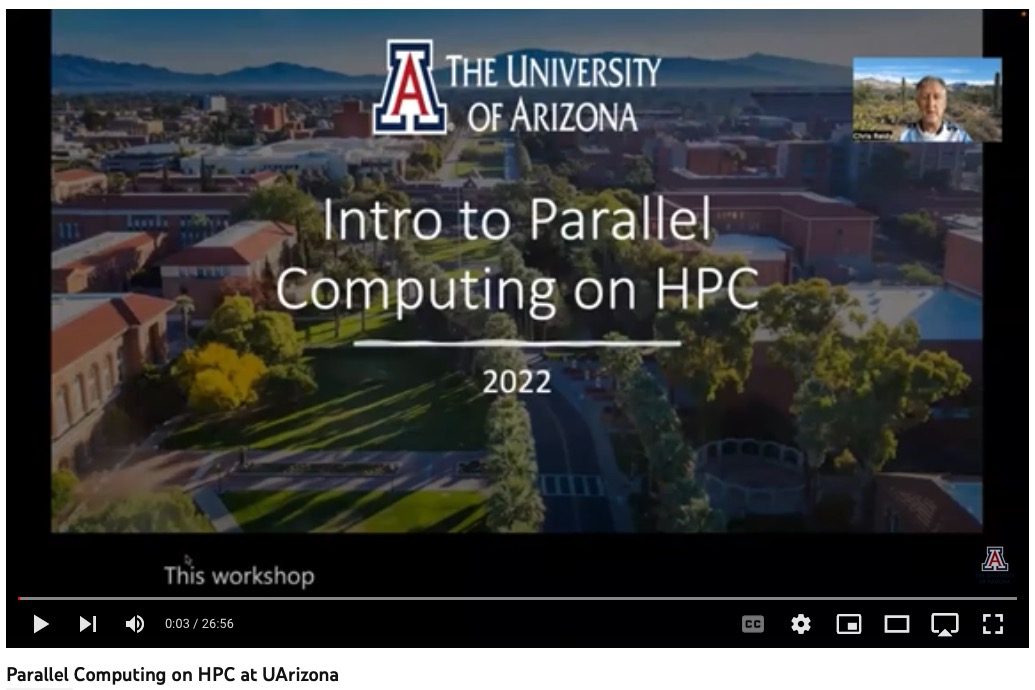
Parallel Computing on HPCMarch 14, 202410-11 AMMain Library
CATalyst B252
RegistrationDetails
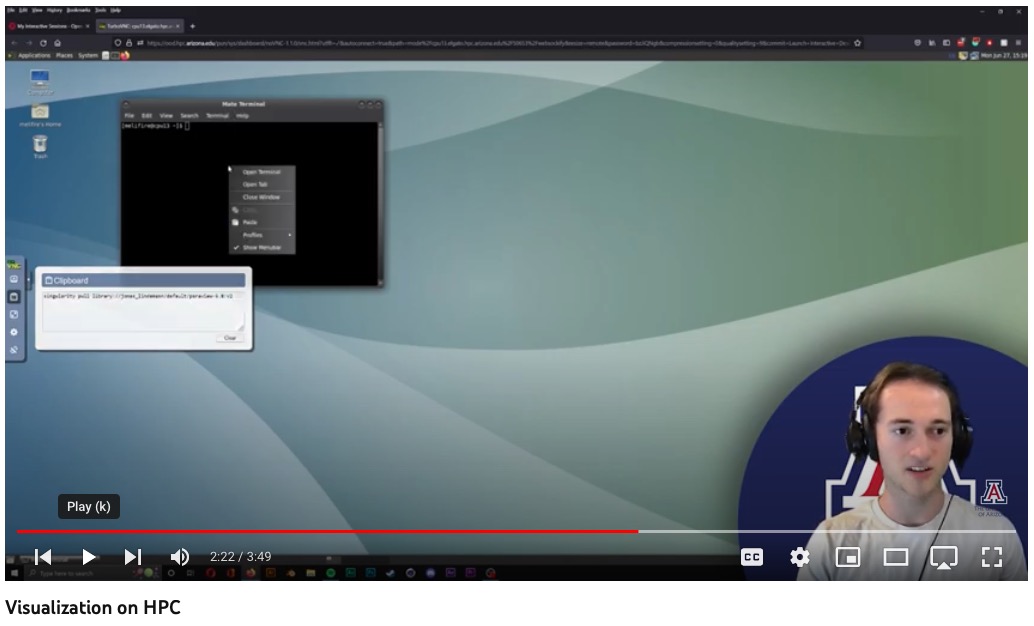
Visualization on HPCMarch 14, 202411-12 Noon

Main Library
CATalyst B252

RegistrationDetails
ML with Python on HPCMarch 12, 202410-11 AMMain Library
CATalyst B254
RegistrationDetails
ML with RStudio on HPCMarch 12, 202411-12 NoonMain Library
CATalyst B254
RegistrationDetails

Prerecorded Tutorials and External Training

 Intro to Linux

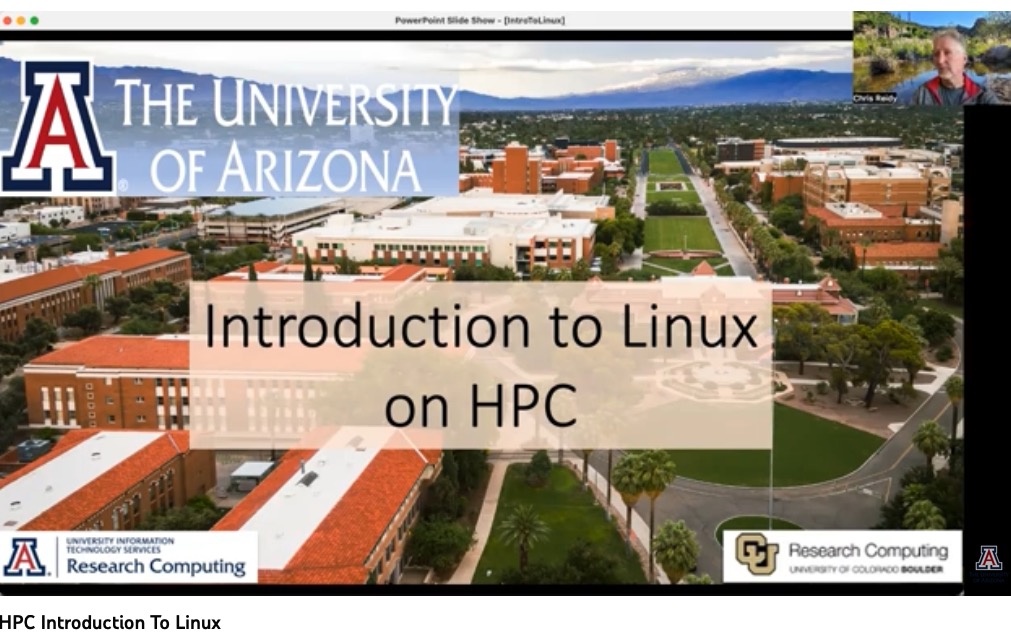
Introduction to Linux on HPC

Click here for more detailed information 

This workshop is not taught in person but is intended to briefly cover general usage of the command line environment on HPC

 Nvidia Workshop

Nvidia Workshop

Nvidia workshop taught by Nvidia staff.

These are usually conducted once or twice a year. The most recent was the Fall of 2023

SubjectDateTimeLocationRegistration
Nvidia Workshop


Abstract

In this session we will cover some of the most popular and effective GPU accelerated libraries that give high performance without the requirement of writing your own custom GPU code. We will cover CUDA-X which has libraries for math, image/video processing, deep learning, and GPU tailored partner libraries. On top of CUDA-X we will cover RAPIDS which will target data science and data analytics workloads. We will conclude the session with interactive coverage of NVIDIAs profiling tools. We will conclude with a brief coverage of Python specific tools we have like CuPy and Numba for customizable GPU accelerated code. By the end of the workshop, you'll have the skills to utilize existing GPU accelerated libraries and write your own Python codes with NVIDIA GPUs!

 Chapel Workshop

Chapel Parallel Programming Language taught by Dr Michelle Strout

The most recent one of these was conducted Spring 2023


SubjectDateTimeLocationRegistration
Chapel Workshop


Chapel Tutorial for Python Programmers: Productivity and Performance in One Language

Many users of HPC systems are also Python programmers. Python is a great programming language for prototyping data analyses and simulations, but things become more challenging when trying to leverage cross-node and within-node parallelism. In this tutorial, we present the general-purpose Chapel programming language for productive, parallel programming. Participants can experiment with Chapel code examples from applications such as k-mer counting, solving a diffusion PDE, sorting, and image processing. For hands-on activities, we provide a container for quick setup and instructions on how to use Chapel on the UArizona HPC systems. Active learning exercises such as online multiple choice about converting common Python patterns into Chapel code enable participants to check what they have learned. Throughout the tutorial, existing large applications written in Chapel are highlighted with quotes from their developers and example code snippets showing Chapel usage in production.  We also give a brief introduction to Chapel's newfound support for GPU programming. Come join us for a fun couple of hours exploring how to write parallel programs in a productive and performant way!

Prerequisites: Please install podman (https://podman.io/) on your laptop beforehand or bring along a friend who has it installed on their laptop and is willing to share.  Here is how you could install and start it on a mac:

brew install podman                   // ignore the llvm15 dep error
podman machine init
podman machine start
podman machine stop                  // what you can use to stop it

Here are the commands you can use to do an initial test of chapel ahead of time if you would like:

podman pull docker.io/chapel/chapel     // takes about 3 minutes
echo 'writeln("Hello, world!");' > hello.chpl
podman run --rm -v "$PWD":/myapp -w /myapp chapel/chapel chpl -o hello hello.chpl
podman run --rm -v "$PWD":/myapp -w /myapp chapel/chapel ./hello
 Data Science Institute

The Data Science Institute is a UArizona organization that provides training, support services, and connections for those in the computing/data science community:

The Data Science Institute facilitates collaboration across an increasingly diverse and active Data Science community by providing workforce development, essential technological assistance, and training to University partners. Formerly Data7, the Data Science Institute aims to foster the next generation of data-driven research by encouraging university-wide interdisciplinary collaboration, gaining external visibility, developing industry alliances, and increasing funding for research at the University of Arizona (UA).

For a list of upcoming training workshops, see: https://datascience.arizona.edu/calendar